- Home Page
- Company Profile
-
Our Products
- Industrial Chillers
- Blow Moulding Chiller
- Water Cooled Chillers
- Acid Chillers
- Injection Moulding Chiller
- Beverage Chillers (Juice Chillers)
- Chiller for Extrusion Lines
- Chiller For Anodizing
- Anodising Chiller
- Chiller For Anodising
- Co2 Gas Chillers
- Ammonia Milk Chillers
- Bio Gas Chillers
- Bottling Plant Chillers
- Industrial Process Chillers
- Low Temperature Chillers
- Chiller For Electroplating
- Batching Plant Chiller
- Air Chiller
- Air Cooled Scroll Chiller (Single Compressor)
- Chilling Plant Turnkey Project
- Blown Film Plant Chillers
- Industrial Scroll Chillers
- Semi Hermetic Chiller
- Laminating Chillers
- Screw Chillers
- Scroll Water Chiller
- Cooling Tower
- Chilling Plants
- Oil Chillers
- Scroll Chiller
- Glycol Chillers
- Chillers
- Screw Type Water Chiller
- Air Cooled Chillers
- Industrial Chillers
- Extra Links
- Contact Us

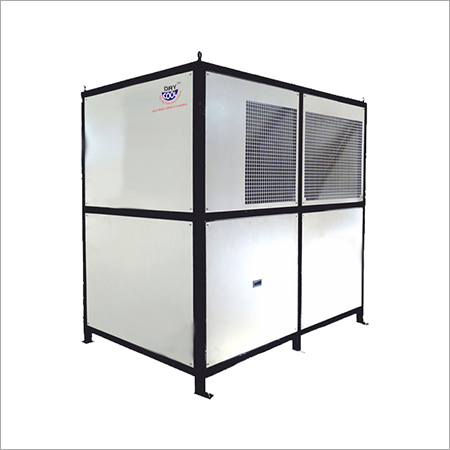
Low Temperature Chillers
Product Details:
- Material Other
- Usage Industrial
- Condition New
- Product Type Low Temperature Chillers
- Click to View more
X
Low Temperature Chillers Price And Quantity
- 1 Piece
Low Temperature Chillers Product Specifications
- Industrial
- Low Temperature Chillers
- New
- Other
Low Temperature Chillers Trade Information
- 1 Piece Per Week
- 1 Week
- Wooden Packing, As per product
- Australia, North America, South America, Eastern Europe, Middle East, Western Europe, Africa, Asia, Central America
- All India
- ISO 9001:2015
Product Description
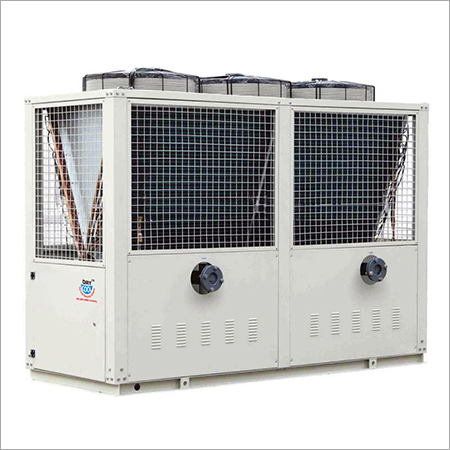
This air cooled type Low Temperature Chiller is reckoned for its energy efficient operation. Its maximum cooling capacity is around 30 Hp and its voltage consumption level is up to 380V. This chiller is equipped with aluminum finned copper tube based condenser, shell tube type or plate type evaporator and pump. It also contains microcomputer based controller and compressor. This Low Temperature Chiller is also equipped with water tank as optional feature. Compact in appearance, this chiller can maintain up to 20 degree C outlet temperature. Its standard has been checked as per its design, diameter, longevity, performance and service life.
Low Temperature Chillers Features:
1) The range of cold temperature is between 0 - 40 Deg c.
2) Flat liquid film exchange heat technology is used; larger the area of exchange heat, faster is the cooling speed.
3) It is easy to clean the evaporator. Refrigeration effect remains unaffected from dirt that gets accumulated in the evaporator.
4) Heat technology is used which automatically takes off the ice at regular time intervals. Therefore, freezing of the evaporator at low temperature should not be a concern.
5) It has a tight equipment structure and the cover area is small.
FAQ
1. Describe what a low-temperature chiller is?
Ans - A refrigeration system called a low temperature chiller is made to lower temperatures below the freezing point. Typically, it is employed to cool processes or goods, including chemical and food products, in industrial and commercial settings.
2. How does a chiller for low temperatures operate?
Ans - A refrigerant, such as Freon or ammonia, is passed through a series of coils in a low temperature chiller in order for it to function. The heat from the process or item being cooled is absorbed by the refrigerant, which is then circulated to the condenser where it is discharged into the atmosphere.
3. What distinguishes a low temperature chiller from a standard chiller?
Ans - The temperature range that a low temperature chiller is capable of producing sets it apart from a standard chiller. A low temperature chiller is made to cool temperatures down to -20 Deg F (-29 Deg C) or below, while a standard chiller is typically made to cool temperatures down to 35-40 Deg F (2-4 Deg C).
4. What advantages can low temperature chillers offer?
Ans - A low temperature chiller can increase efficiency, improve product quality, and extend the shelf life of products, among other advantages. The growth of bacteria, fungi, and other microbes can be slowed down by lowering process or product temperatures below the freezing point, which can help to increase the shelf life of items.
5. What kinds of uses for a low temperature chiller are advantageous?
Ans - In the manufacture of chemicals, medicines, food processing, and other industrial processes, low temperature chillers are frequently employed. Additionally, they can be utilised to cool hospitals, data centres, and other commercial uses.
Tell us about your requirement

Price:
Quantity
Select Unit
- 50
- 100
- 200
- 250
- 500
- 1000+
Additional detail
Mobile number
Email

Other Products in 'Industrial Chillers' category

Contact Details
DRYCOOL SYSTEMS INDIA (P) LTD.
GST : 09AABCD6383R1ZV
GST : 09AABCD6383R1ZV

- C-34, Sector 63,Noida - 201301, Uttar Pradesh, India
- Phone : 08045801669

- Mr Vatsal Verma (Director)
- Mobile : 08045801669
- Send Inquiry
 Send Inquiry


Quick Inquiry Form
 |
DRYCOOL SYSTEMS INDIA (I) P. LTD.
All Rights Reserved.(Terms of Use) Developed and Managed by Infocom Network Private Limited. |
